
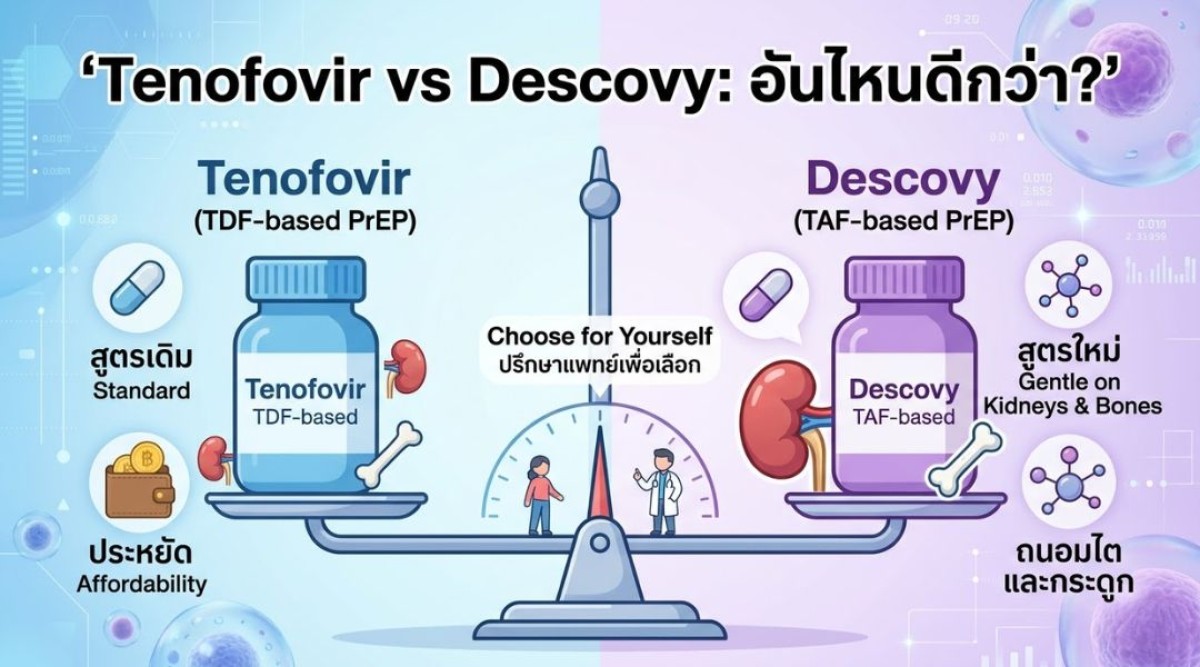
Over the past decade, PrEP (Pre-Exposure Prophylaxis) has become one of the most effective tools for preventing HIV worldwide. When taken consistently, PrEP can reduce the risk of HIV transmission from sexual contact by up to 99%. Because of this high level of protection, PrEP is widely recommended for people who may have a higher risk of HIV exposure.
Today, two of the most commonly discussed PrEP medications are Tenofovir (TDF) and Descovy (TAF). Many people who are considering starting PrEP often wonder which option is better, safer, or more suitable for their lifestyle.
In this article, we will compare Tenofovir and Descovy in detail—including how they work, their effectiveness, potential side effects, cost differences, and which option may be best for different individuals. Understanding these differences can help you choose the most appropriate HIV prevention PrEP medication with the guidance of a healthcare provider.
What Is PrEP and How Does It Prevent HIV?
PrEP stands for Pre-Exposure Prophylaxis, a preventive strategy that involves taking antiretroviral medication before potential exposure to HIV. The medication works by blocking the virus’s ability to replicate in the body if exposure occurs.
When taken regularly, PrEP creates protective drug levels in the bloodstream and tissues. If HIV enters the body, these medications prevent the virus from establishing a permanent infection.
Research has consistently shown that people who take HIV prevention PrEP medication daily can reduce their risk of HIV infection by about 99% during sexual exposure. However, its effectiveness depends heavily on adherence. Missing doses frequently can significantly reduce protection.
Currently, two main formulations dominate the PrEP landscape:
Tenofovir Disoproxil Fumarate (TDF)
Tenofovir Alafenamide (TAF), marketed as Descovy
Although both contain similar components and work in similar ways, there are important differences between them.
What Is Tenofovir (TDF)?
Tenofovir Disoproxil Fumarate, commonly known as TDF, is one of the earliest and most widely used medications for PrEP. It has been used globally for more than a decade and is included in well-known medications such as Truvada as well as many generic versions.
Because TDF has been studied extensively, it is often considered the standard PrEP regimen in many public health programs worldwide.
Key advantages of Tenofovir (TDF)
Extensive clinical research and long-term safety data
Widely used around the world
Available as affordable generic medication
Suitable for multiple populations, including men and women
Due to its lower cost and proven effectiveness, TDF remains the most accessible option for many people seeking HIV prevention PrEP medication.
However, in some cases, long-term use of TDF may affect kidney function or slightly reduce bone mineral density. These effects are generally uncommon and are usually monitored through routine medical checkups.
What Is Descovy?
Descovy is a newer PrEP medication that uses a different formulation of Tenofovir known as Tenofovir Alafenamide (TAF).
TAF was designed to deliver the active drug more efficiently into cells while using a lower dose of Tenofovir in the bloodstream. This improvement helps reduce the potential impact on the kidneys and bones compared with the older TDF formulation.
Key advantages of Descovy
Newer generation PrEP medication
Lower systemic Tenofovir exposure
Potentially less impact on kidney function
Reduced effects on bone density
Because of these characteristics, some healthcare providers recommend Descovy for individuals who may have higher risks related to kidney health or bone health.
However, Descovy is generally more expensive than TDF and may not be available in all clinics or public health programs.
Tenofovir vs Descovy: Key Differences

Although both medications are considered effective HIV prevention PrEP medications, there are several factors that differentiate them.
Effectiveness in Preventing HIV
Both Tenofovir (TDF) and Descovy (TAF) are highly effective in preventing HIV when taken as prescribed.
Clinical trials have demonstrated that Descovy is non-inferior to TDF, meaning that it provides a similar level of protection. When taken consistently, both medications can reduce the risk of HIV transmission through sexual activity by approximately 99%.
In practical terms, this means that the most important factor for protection is taking the medication consistently, regardless of which version you choose.
Potential Side Effects
Side effects are one of the primary reasons people compare these two medications.
Tenofovir TDF has been associated in some cases with:
Mild decreases in kidney function
Slight reductions in bone mineral density
These effects are usually mild and reversible once the medication is stopped.
Descovy, on the other hand, was developed to minimize these concerns. Because TAF delivers the medication more efficiently inside cells, the overall exposure of Tenofovir in the bloodstream is lower. As a result, it may have less impact on kidneys and bones.
However, some studies have shown that Descovy may lead to slightly higher cholesterol levels in certain individuals. For most users, both medications remain very safe when taken under medical supervision.
Approved Populations
Tenofovir TDF has been approved for use in a wide range of populations, including:
Men who have sex with men (MSM)
Heterosexual men and women
People who inject drugs
Serodiscordant couples (where one partner is HIV-positive)
Descovy, however, has currently been approved mainly for:
Men who have sex with men
Transgender women
Research on Descovy for people exposed through vaginal sex is still limited, which is why TDF remains the preferred option for some populations.
Cost and Accessibility
Cost is another important factor when choosing between these medications.
Tenofovir TDF has a major advantage because it is available in generic versions, making it significantly more affordable. This is why many public health programs and HIV prevention initiatives rely on TDF.
Descovy, as a newer branded medication, typically costs more. For this reason, it may not be offered in every clinic or may require higher out-of-pocket expenses in some countries.
Who Should Consider Tenofovir (TDF)?
Tenofovir TDF may be the best choice for individuals who want an effective and affordable PrEP option. It is particularly suitable for those without existing kidney issues or bone conditions.
People who may benefit from TDF include:
Individuals starting PrEP for the first time
People seeking a cost-effective option
Those without kidney disease or osteoporosis
Individuals who want a medication with extensive research support
Because of its accessibility and strong evidence base, TDF remains the most widely used HIV prevention PrEP medication globally.
Who Should Consider Descovy?
Descovy may be recommended for individuals who need a PrEP option with potentially fewer impacts on kidney or bone health.
Groups who may consider Descovy include:
Individuals with reduced kidney function
People who experienced side effects from TDF
Those seeking a newer formulation of PrEP
However, the decision to switch or start Descovy should always be made in consultation with a healthcare provider.
Steps Before Starting HIV Prevention PrEP Medication
Before beginning PrEP, it is important to undergo several medical evaluations to ensure the medication is safe and appropriate.
Common steps include:
HIV testing to confirm that you are HIV-negative
Kidney function testing
Screening for sexually transmitted infections (STIs)
After starting PrEP, healthcare providers usually recommend follow-up visits every three months to monitor health and ensure continued protection.
Learn More About HIV Prevention and PrEP
If you would like to explore more information about PrEP, HIV prevention, and sexual health education, you can learn more at:
This website offers helpful resources about HIV prevention strategies, sexual health awareness, and support for LGBTQ+ communities.
Conclusion: Tenofovir or Descovy — Which One Is Better?
When comparing Tenofovir and Descovy, it is important to understand that both are highly effective HIV prevention PrEP medications.
Tenofovir TDF offers affordability, accessibility, and a long track record of research. Descovy provides a newer option that may reduce certain long-term side effects related to kidneys and bones.
Ultimately, there is no single “best” option for everyone. The right choice depends on individual health factors, lifestyle, and budget, as well as recommendations from healthcare professionals.
The most important factor in HIV prevention remains consistent adherence to PrEP and regular medical monitoring. When used correctly, PrEP can empower individuals to protect their health and enjoy safer, more confident sexual lives.
Sources and further reading
Primary and authoritative sources used for context and fact-checking.
- Frequently asked questions on sexual and gender diversity, health and human rights World Health Organization (WHO)
- The Thai Handbook of Transgender Healthcare Services IHRI & Center of Excellence in Transgender Health, Chulalongkorn University
- Standards of Care for the Health of Transgender and Gender Diverse People, Version 8 World Professional Association for Transgender Health (WPATH)
- Consolidated guidelines on HIV, viral hepatitis and STI for key populations (2022) World Health Organization (WHO)
- STI Treatment Guidelines: Transgender and Gender Diverse Persons U.S. Centers for Disease Control and Prevention (CDC)
- Legal Gender Recognition in Thailand: A Legal and Policy Review United Nations Development Programme (UNDP)
- The struggle of trans and gender-diverse persons United Nations Human Rights (OHCHR)