

Thailand is the first country in ASEAN and the third country in Asia to pass a marriage equality law, which recognizes same-sex marriages, changing the word “husband and wife” to “spouse” in order to comply with the constitutional principle that states that people are equal before the law.
This law has been a journey for more than 20 years, with both opposition and support, until the day the House of Representatives approved it by a vote of 400 to 10 in March, and three months later, the Senate approved it by a vote of 130 to 10.
The law was just published in the Royal Gazette yesterday (September 24) and will come into effect in 120 days, on January 22 next year.
The marriage equality law will allow people aged 18 and over to legally register their marriage or divorce, and have the right to receive benefits and welfare from the state as spouses, such as social security and the right to claim medical expenses, as well as the right to make medical decisions. and the right to manage the assets of spouses, etc.
BBC Thai invites you to explore 3 main factors from historical background, religion and culture that make Thailand more friendly and open to LGBTQ people than other countries in Asia.
Factors of belief and religion
Dr. Narupon Duangwises, an academic from the Princess Maha Chakri Sirindhorn Anthropology Centre (Public Organization) who has studied the history, culture and diversity of LGBTQ people in Thailand for over 10 years, told BBC Thai that in the Southeast Asian region, there are beliefs in the creation of humans in many forms. When looking back at the influence of Hinduism that was accepted from India, it was found that many gods are a mixture of men and women, resulting in an open space that supports the diversity in Thai culture. Buddhism does not prohibit or punish LGBTQ people. It only prohibits “bhandeka”, which means transgender or eunuchs, from becoming monks.
“If in daily life you are a bhandeka or a villager, Buddhism does not bring you as a prisoner, imprison you or be whipped like you are in Muslim or Christian,” he said. “In the life of a Theravada Buddhist, if you maintain your status and do not cause trouble to anyone, He can exist as a transgender or a transgender.”
For this reason, he sees Thai society, which is quite multicultural, as a society that is flexible by nature.
In addition, the fact that Thailand escaped colonialism in the 18th century meant that Thailand was not under the influence of Western colonialism, which enforced laws that prohibited homosexual behavior because it was considered a sin that violated God’s law according to Christianity.

For example, Burma (formerly known as Myanmar) used to be a country that was open to LGBTQ people similar to Thailand. It was found that transgender people could express themselves in religious ceremonies, such as being mediums, performing important ceremonies at weddings, or contacting spirits, similar to a ritual leader or master of ceremonies.
However, around the 1820s, the British colonialists came to rule Burma and implemented the Felony Law, which was influenced by Christianity. It prohibited citizens from engaging in homosexual behavior because it was considered a sin that violated God’s law. The influence of this law did not only affect Burma, but also Malaysia and Singapore, which were also under British influence.
“When the British withdrew, Burma declared its independence. The military dictatorship or Burmese military government had a patriarchal mindset and did not accept the gender of gays and transgender people,” said Dr. Narupon. “Colonialism made the idea of gender limited to only men and women. This made the old tradition that was open to [lgbtq people] illegal.”
Currently, it is found that in Burma, some LGBTQ people still continue to play the role of religious ritual practitioners. But it only happens at the local level because the central government does not accept or support it in any way.

Laos, Vietnam and Cambodia, which were under French colonial rule in the 1880s, were also influenced by the French colonialist ideology, which was similar to the British Felony Law, which did not recognize same-sex relationships. In addition, Confucian ideology from China was influential in Vietnam. Therefore, these countries were not areas that were very open to sexual diversity.
Confucianism is a way of governing and organizing society that clearly defines the roles of men and women. It places great importance on the patriarchal ideology, which later led to gender segregation. Men were also expected by their families to marry women in order to have heirs. Therefore, homosexuality did not meet these Confucian values.
Dr. Naruphan also mentioned the influence of Islam, saying, “The laws of Islam clearly state that men are prohibited from cross-dressing or having relationships with people of the same sex. We will find that Islam has the power to suppress gays and transgenders in Malaysia and Indonesia. There have also been murder cases due to violating religious laws.”
Historical factors: Southeast Asian society has long accepted the existence of sexual diversity.
A study on “Sexual Diversity in the Dimension of Human Social History” by a lecturer in the field of social sciences, Faculty of Education, Rajabhat Loei University, reflects that people have been aware of the existence of sexual diversity since ancient times. It was found that in the Southeast Asian region, there are records of transvestites in the Chenla Kingdom who seem to have freedom in public.
While literature and literature in the Sukhothai and Ayutthaya periods partly states that secret adultery between a man and a woman, when they die and are reborn, will result in being transvestites in the next life. In the early Rattanakosin period, there was a punishment in the Palace Law regarding sodomy between men and women in the royal court. However, sodomy between people of the same sex in the palace or outside the palace, between the elite and the common people, or between the elite among themselves, was not despised or punished in any way.

The term “Pu Mae-Pu Mia” is a term used by northern and northeastern people to refer to a person who has both male and female genders in the same person. In the Lanna language, it is called “Pu Mae-Pu Mia”.
“In the rural areas, people who grow up in a way that is not male or female, or have the characteristics of a mother and a wife, still perform their duties and roles in the family as men. Ladyboys in rural society are a state that creates fun, is a creative story, but can get married, have children, and have wives as long as they are responsible for their own children and wives.”
“Around 1937-1957, ladyboys would show their feminine demeanor only when there was a temple fair or traditional festival, which was not the way we understand it today. At most, they would just wear a sarong, have long hair, and put flowers in their hair. But when they went out to farm, they did not dress up as women. They worked hard like men, even though they had feminine demeanor. They had a worldview that they had to be responsible for their parents, siblings, and family,” said an anthropologist from the Sirindhorn Anthropology Centre.
Dr. Naruphan also explained that in the past, when people got married, the eldest daughter was the one who inherited the property from her parents. They have to live in the family and produce heirs, while sons have to move out to live in the woman’s house to be sons-in-law and laborers for their parents-in-law.
“Because families in Thai society are very flexible, in families with many children, male siblings who have feminine temperaments, if they do not get married, they will still [stay home and work] and help their parents. But if they are transvestites and marry other women, they will move out to be laborers for their parents-in-law’s house, meaning they still have to fulfill their male duties. However, it has been found that some men with feminine temperaments tend to be single, may have secret relationships with other men in the village, have fun together, but do not think of opening up and becoming husband and wife as we understand it in the present era.”
The report “Ma Khid Pu Mia: The Role of LGBT in Lanna Ritual Areas”, published on the website of the Chiang Mai National Museum, also explains the beliefs about ghosts in Lanna society, where the ritualists are of diverse genders. It was found that some of the spirit mediums, called “Ma Khid”, are Pu Mae or Pu Mia, who are often spirit mediums for “Phi Chao Nai”, which refers to spirits who used to be kings or royalty who once ruled a city or region, and protect those who they respect. After they die, they become ghosts.
The article stated that the reason why the ghosts of the masters chose the female mediums was because they believed that these people had no menstrual problems and could take care of their clothes and the spirit house to be beautiful and clean like women. However, some of the riders felt that people respected the ghosts of the masters who possessed them, not the female mediums as people with diverse genders.
However, the existence of the female mediums like this is a way to open up gender spaces for people with diverse genders through ancient beliefs in a subtle way, and it does not create any embarrassment for those who believe in the ghosts of the masters.
Cultural factors: Open spaces for people with diverse genders in entertainment businesses
An anthropologist from the Sirindhorn Anthropology Centre continued that the performance of folk plays and entertainment is one piece of evidence that clearly shows that people with diverse genders in Thailand have been able to freely perform transgender roles in public before.
“Likay, Lakhon Nok, Chatri, Nora, and Khon are open spaces that allow transgender people to perform roles, men playing the roles of women, and women playing the roles of men. It is a form of performing arts. Society does not criticize that we cannot perform in this way or that way. The cultural space in Thai society therefore provides an opportunity for people who are not male or female to show their abilities.”
Dr. Naruphan continued that homosexual behavior during the reigns of King Rama VI and VII (around the 1910s-1930s) often occurred in the performing arts, as it was an area that allowed the most self-revealing of identity and sexual orientation.
“They were able to clearly express themselves when they were in the non-formal and in-formal drama troupes, likay, khon, etc., because they used people of the same gender to perform in the plays. The male leads who were played by men had to be men with feminine features and feminine mannerisms to play the female leads. Then, when the play was over, they lived in the troupe with a nobleman as the leader.
The nobleman was a member of the royal family, a high-ranking official who worked for the palace. They would govern their own troupes, and some noblemen had relationships with their actors. At that time, it was a culture where people had to belong to their lords. Therefore, as actors, you just have to live in your own society. Whether you have a relationship with anyone is your business.”
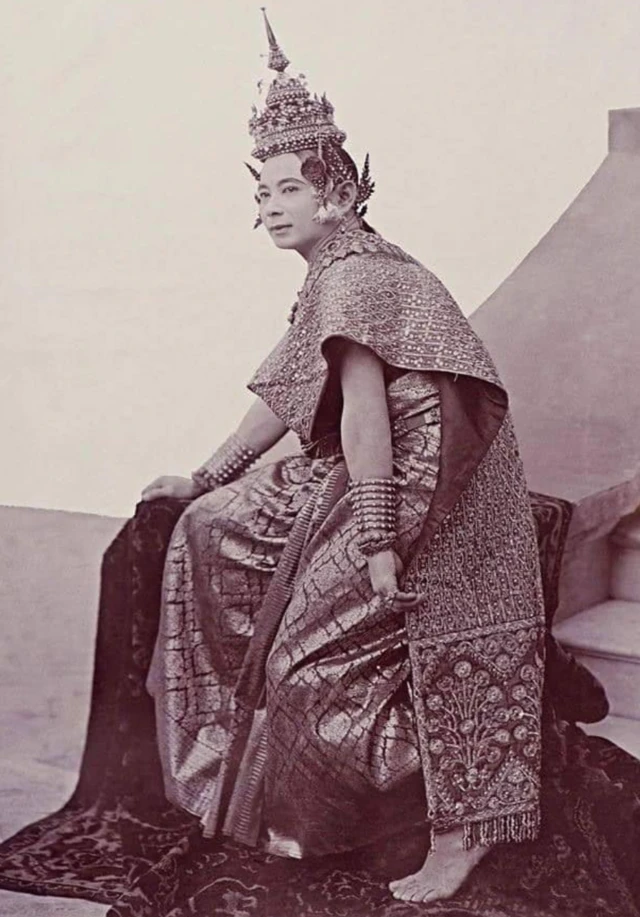
Phraya Pipat Kosa (Celestino Xavier) played Nang Rachana on the occasion of the first royal return from Europe on January 15, 1897.
However, in another aspect, it seems that at that time, male actors had a much greater advantage than female actors, according to the information in the article “Transgender Role Performance: Gender-Based Concepts and Key Factors Affecting Gender Transgenderism” published in the Journal of Humanities and Social Sciences, Rajabhat Bansomdejchaopraya University.
The article stated that the Palace Law prohibited commoners from having female troupes, but reserved it for the king only. Therefore, the Lakhon Nai, which used only female actors, was born. It was found that towards the end of the reign of King Rama V, there was a drama teacher named Chum, who was the daughter of Phraya Si Pipat (Pae Bunnag), who was famous for her performance as the Ngo from Inao. However, she was still punished for her behavior of dressing as a man because the values at that time considered gender expression by women to be inappropriate.
While Lakhon Nok often performed roles that emphasized comedy. The language is blunt, clear, and emphasizes emotions or includes fighting that does not seem modest. Therefore, the main actors are men to play the different roles because women in that era were required to be modest and reserved. As for the Chatri drama, which is a traveling drama that always changes locations, using male actors is more flexible. Similarly, Khon, which has to show battles, often uses the Royal Guards or groups of courtiers to perform.
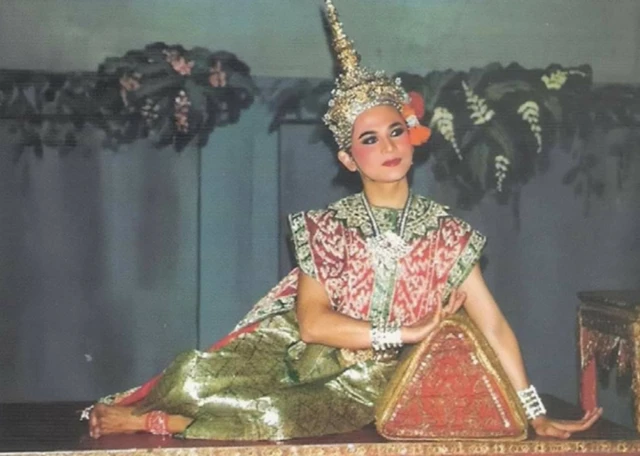
Assoc. Prof. Dr. Supachai Chansuwan plays the role of Nang Sida. The article also said that it is not possible to generalize that the performance of cross-gender roles in these entertainments is always the area of the LGBTQ group. However, it may be a display of the potential of the actors who want to show that they can take on any role to prove their own abilities. The interview example of Assoc. Prof. Dr. Supachai Chansuwan, National Artist in Performing Arts (Dance) in 2005, who said, “While performing as Rachana (the female character from Sangthong), I did not limit myself or feel determined to feel that I thought of myself as a woman, but set my mind as Nang Rachana.”
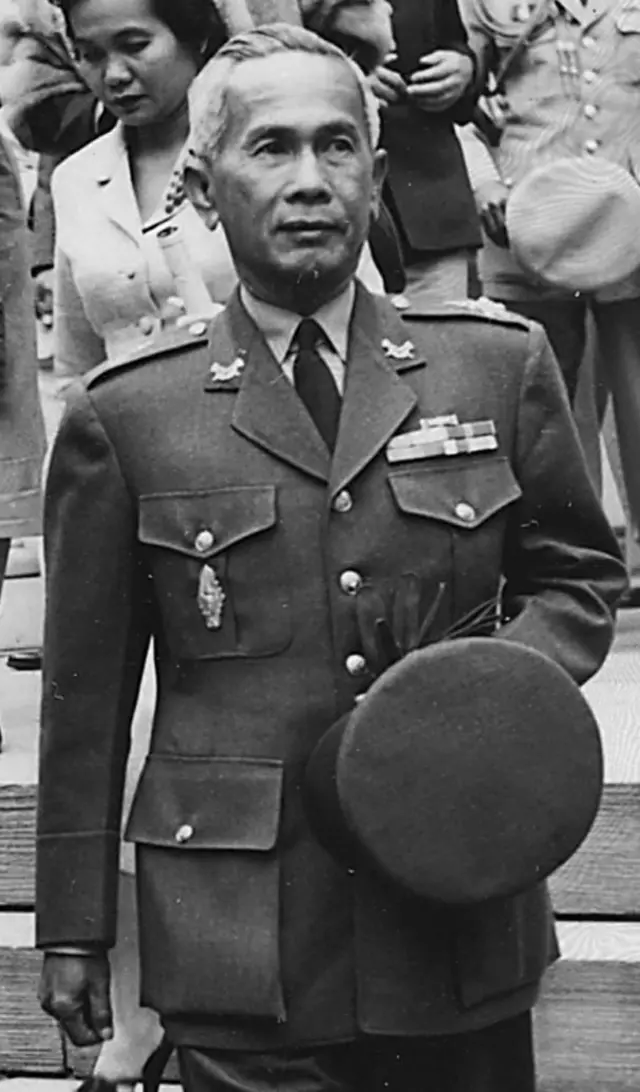
One of the new rules set during the time of Field Marshal P. Phibunsongkhram as Prime Minister was dressing according to one’s gender identity.
A civilized era where gender diversity became abnormal
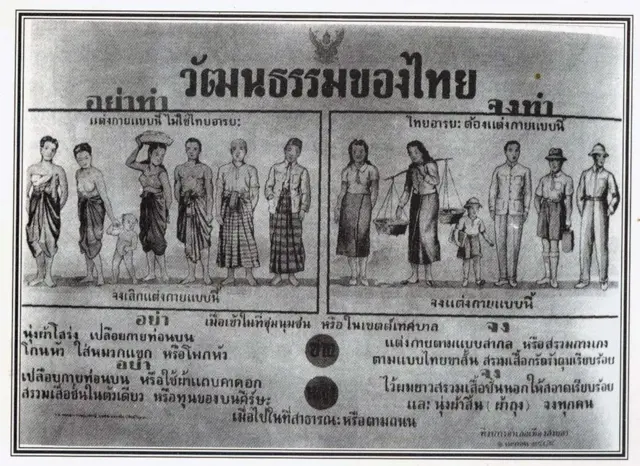
Dr. Naruphan said that around 1937-1957, which was during Field Marshal P. Phibunsongkhram’s government, Thailand adopted Western civilized ideas. One of them was the rule on gender regulation. The government issued several announcements specifying how men and women should dress in a Western way, such as men wearing long pants, shirts, and betel nuts, while women should wear skirts, shoes, and have long hair. It also stipulated that both men and women should not wear chong kraben, etc.
“The names given to women should reflect their femininity. They should not use masculine names. As for men, they should have names that match their gender identity. Performances should use actors who match their birth gender to play the male and female characters. Men should not play the female characters or women should not play the male characters. It was a cultural revolution, causing transgender people who used to have roles in the performing arts to have to change to other jobs. If they were in the countryside, they could still perform, but they lived haphazardly because the state did not support them.”
Around 1957 (1957), Thailand began to develop its economy according to the capitalist concept and reform the country into an industrialized country. Therefore, the first National Economic and Social Development Plan was established. In addition, it was found that American influence had a great effect on urban development, whether in terms of scientific knowledge, technology, or the translation of many Western textbooks for use in Thailand.
“There is a theory from a psychologist that is stated in the textbook that sexual deviance behavior is translated and taught in schools. Parents teach their children not to have sexually deviant behavior, not to be sexually deviant, that transgender people are mentally ill and must seek treatment and consult a psychiatrist. These textbooks have been produced in large numbers since 1957.
These ideas came later. Before that, we didn’t call transgender people normal. We might call them by their name and say that they are actors in this or that theater troupe. We don’t hate them. But modern education translates theories that are quite discriminatory, leading to gender discrimination. Those textbooks have been used since elementary, secondary, and university levels, and even in health education or civic studies, they repeatedly emphasize that transgenders are sexually abnormal,” said Dr. Narupon.
Therefore, parents who grew up during Field Marshal P.’s era have ingrained ideas about what responsibilities men and women should have. “As for those born as intermediate genders, society will not accept and look down on them, which is a result of Field Marshal P.’s patriarchal mindset, which promoted military traditions and used Western knowledge to support the government’s masculinity.”
Until 2017, the Office of Academic Affairs and Educational Standards, Office of the Basic Education Commission, revised the health education textbooks for Prathom 1-6 by specifying key words, meanings, and content to be in line with the Gender Equality Act of 2015. However, none of this would have happened if it had not been for the campaign by civil society groups of LGBTQ people in Thailand after finding that the content in the textbooks was highly gender-biased.
Dr. Narupon also expressed his view that the media is another thing that reinforces bias against LGBTQ people. Especially the color news agencies that often have sensational crime headlines and emphasize that LGBTQ people are insane and abnormal.
“If gays and transgenders commit any illegal crimes, their gender identity will be emphasized even more,” said Dr. Naruphan. “Mainstream media often chooses to label them as abnormal, sexually deviant people, making them more cruel or aggressive than normal. This reproduces the fear of transgender behavior, even though it has nothing to do with it.”
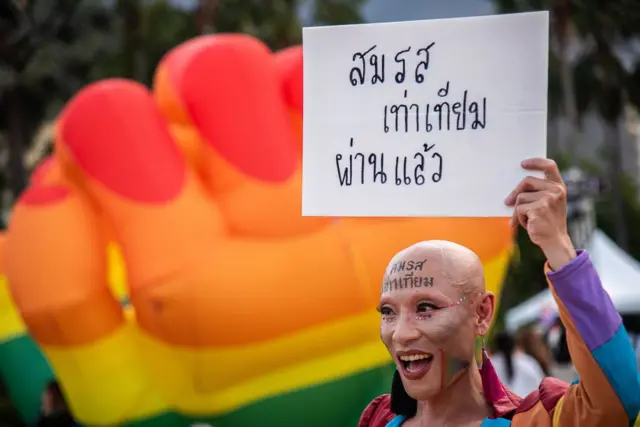
“Equal Marriage”: A Victory That Still Faces Challenges
In the past 10 years, Thai society has been moving to demand rights for LGBT people, including the elimination of gender discrimination and prejudice. The movement was supported by the International LGBT Movement in the 2000s, which occurred in various countries simultaneously.
However, scholars from the Sirindhorn Anthropology Centre pointed out that since the era of Field Marshal P. until now, a combined period of more than 80 years, Thailand has had very few civilian governments. Almost all leaders are men, and most are soldiers or police officers. He sees Thai politics as highly dominated by men (male domination).
“And they are heterosexual males, believing in their strength and being gentlemen, which is an illusion that believes that military men must not cry, be weak, not sissy, and not work like women do. Men must be on the battlefield, be brave, and do work that shows toughness and endurance. For 80 years, it has been dominated by the patriarchal ideology for a long time.”
“Even though Thailand has never been a colony of Western nations, But we have been colonized through military authoritarian thought and education that produces textbooks about gender dysphoria that we have inherited from the colonizers. So for the past 80 years, we have been living in a latent colonialism. We have no safe space for LGBTQ people because those in power in society have reinforced gender bias for 80 years.”
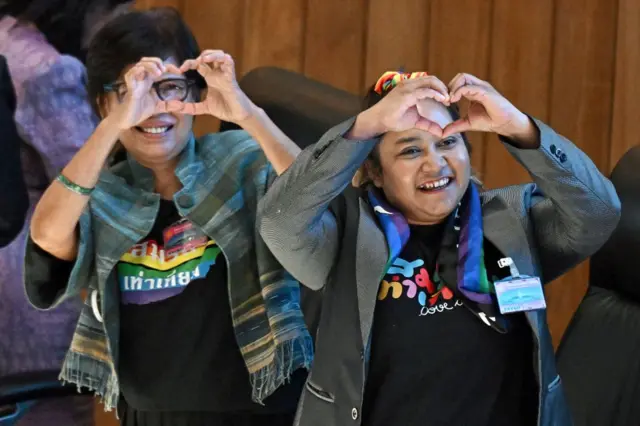
LGBTQ activists celebrate after the Senate's final vote on the same-sex marriage bill at the Thai parliament on June 18, 2024.
He sees Thailand's adoption of the marriage equality law as a victory for LGBTQ people in Thai society, but it does not guarantee that families and society will be safe spaces for these groups of people. The idea that has been ingrained since the time of Field Marshal P. has not disappeared, and not all families raise their children with sexual freedom as many expect.
"Some parents want to raise their children to be the same gender as they were born, even though the girl may be attracted to the same gender. But the parents never allow their children freedom or ask them if they want to wear a skirt. They wear a skirt if they see a girl. Therefore, when parents raise their children to follow the norm (stereotype) of women and men, it is a power that parents use without thinking, forcing their children to follow the fantasies of women and men as society has drawn.
In many Western countries that have had marriage equality laws for 10-20 years, we still see a lot of discrimination against LGBTQ youth in schools. They are bullied or harassed. Therefore, the law does not really guarantee freedom in daily life.”
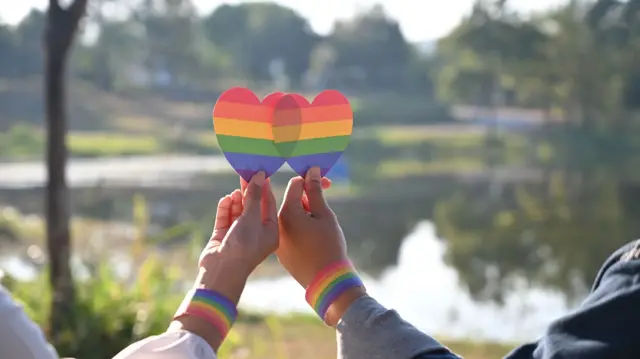
The survey found that Gen Millennials (people born between 1981 and 1996), children of parents who grew up in families that were modernized during the era of Field Marshal P., feel the most hopeful about the marriage equality law.
A survey by YouGov (Thailand) revealed that the majority of Thais, approximately 64%, have a positive attitude towards the newly passed marriage equality bill by the Senate, with 32% feeling happy, 18% feeling proud, and 14% feeling hopeful.
YouGov is a market research company and conducted an online survey between July 18-23 among a sample of 2,055 Thais aged 18 and over.
The survey also found that most Thais support marriage equality, but women support it more than men. Gen Z (people born between 1997 and 2012) feel happy and proud. Meanwhile, millennials (people born between 1981 and 1996), children of parents who grew up in families that were modernized during the era of Field Marshal P., are most hopeful about the Marriage Equality Act.
Respondents said the most perceived benefit of the Marriage Equality Act is access to legal rights, such as inheritance rights and tax breaks for spouses, but only one in four believe the bill will lead to greater social acceptance.
Cr: BBC
Sources and further reading
Primary and authoritative sources used for context and fact-checking.
- Frequently asked questions on sexual and gender diversity, health and human rights World Health Organization (WHO)
- The Thai Handbook of Transgender Healthcare Services IHRI & Center of Excellence in Transgender Health, Chulalongkorn University
- Standards of Care for the Health of Transgender and Gender Diverse People, Version 8 World Professional Association for Transgender Health (WPATH)
- Consolidated guidelines on HIV, viral hepatitis and STI for key populations (2022) World Health Organization (WHO)
- STI Treatment Guidelines: Transgender and Gender Diverse Persons U.S. Centers for Disease Control and Prevention (CDC)
- Legal Gender Recognition in Thailand: A Legal and Policy Review United Nations Development Programme (UNDP)
- The struggle of trans and gender-diverse persons United Nations Human Rights (OHCHR)