

April 2, 2024
The Senate (Senator) meeting voted to accept the principle of the draft bill (Amendment to the Civil and Commercial Code (No...) B.E. .... or the draft bill on equal marriage, first reading, along with setting up a 27-member special committee to consider the draft bill to study this draft bill, with a period of 7 days for amendments.
The Senate meeting's consideration of the draft bill on April 2 was a step after the House of Representatives passed the bill in the 2nd and 3rd readings last week. The law requires the Senate to consider it within 60 days.
The Senate meeting opened for 5 Senate committees to present their observations on the draft bill, with most of the issues raised by the Senate being concerns about the draft bill, such as the section requiring amendments to other laws that require agencies to submit amendments to the Cabinet for review within 180 days, and the writing of provisions on the protection of state officials performing their duties. And concerns about automatic entitlement under other laws
After the presentation of observations and the discussion of the senators, the Senate voted 147 to 4, with 7 abstentions, and resolved to set up a special committee of 27 people: the Senate Proportional Committee, the Cabinet Proportional Committee, and the People's Proportional Committee.
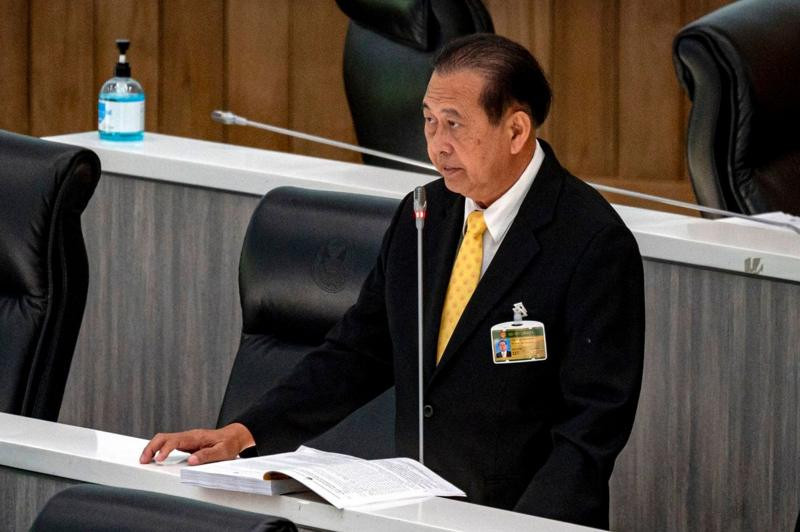
Mr. Seri Suwanphanon, a senator, discussed in the Senate meeting that the proposal of this law was the public's demand, but the senators would not make decisions or consider it according to the trend. When society has changed and developed to this extent, they must accept what the public has proposed. However, he believes that if the law is enacted, people who live together must be able to live together.
"We give people the opportunity to get married and register their marriage, but after a short while, they break up, which becomes a social problem. Therefore, we must help solve this problem. For example, before registering marriage, try living together for 6 months before registering," Mr. Seri suggested.
Mr. Seri said that he supports this law, but as a lawmaker, he must carefully consider it so that there will be no problems in the implementation of the law in the future.
"This law is acceptable to society. The House has enacted the law. But we have to think ahead that we have to let them live in stability and sustainability."
For other discussions and observations of the Senate, they are as follows:
Worried that the Department of Provincial Administration will not amend the regulations and issue new marriage certificates within 120 days
Mr. Panya Nganlert, a member of the Senate's Committee on State Administration, presented the committee's observations, which expressed concerns about the enforcement period of the draft bill, which is set at 120 days, and the 180-day period for responsible agencies to review the law, whether the agencies will be able to complete it within the specified period.

Mr. Panya said that the Department of Provincial Administration, Ministry of Interior, must amend 4 acts and regulations, namely the Family Registration Act of 1935, the Nationality Act of 1965, the Female Title Act of 2008, and the Ministry of Interior's Regulation on Family Registration of 1998. They must also improve the database operating system and provide understanding to the officers of the Department of Provincial Administration nationwide.
This Senate committee believes that in the part related to registration, The Department of Provincial Administration must urgently amend the regulations and forms within 90-120 days, and must also amend the forms of marriage certificates and divorce certificates, both of which must amend the words “male and female” in the documents, which will take 90 days due to the length of the procurement process.
This Senator concluded that even though the representative of the Department of Provincial Administration stated that the amendments could be completed within 120 days, the period may not be enough. Therefore, he proposed that if the period could be extended, the legal process would be more efficient.
The requirement for responsible agencies to review laws within 180 days is also an issue that the Senate’s Legal Affairs Committee is concerned about whether it will be able to proceed in time, because there are as many as 47 related laws that need to be reviewed, and some of them may take a long time. Therefore, it is considered that the time should be extended for various agencies.
It is proposed to have provisions to protect Muslim-Christian marriage registration officers.
The observations of the House of Representatives also expressed concern about sensitive religious issues.
Mr. Panya read the observations of the committee that when the amendments to the law are announced, it may affect both Christian and Muslim people, because the establishment of a family according to the teachings states that marriage must be between a man and a woman only. God created humans as two genders to preserve the human race. Therefore, establishing a family for people with diverse genders is against religious teachings.

The committee sees fit to establish relevant criteria to protect government officials who are responsible for registration so that they can perform their duties in accordance with the law and religion at the same time, in cases where they have to perform the duty of registering marriages between people of the same gender, such as Islam.
"If a government official is Muslim, he will not be able to be a registrar for registering marriages between people of the same gender. If the official does not register, he will be guilty of neglecting his duty. However, if the official accepts the registration, he will be guilty according to religious principles, making it unacceptable in society of that religion," explained Mr. Panya.
Religious Sensitivity of Marriage Equality Act
Wanchai Sonsiri, Senator and member of the Senate Committee on Religion, Morality, Ethics, Arts and Culture, spoke about the draft Marriage Equality Act, stating that there are only a few countries that have this kind of marriage equality law, and Muslim countries do not recognize this kind of law, which is a sensitive matter in amending the law to suit the current social conditions.
The changing society, the committee therefore believes that the amendment should be carefully considered.
Wanchai explained the committee’s observations that this law is not a compulsion to act, but rather an opportunity to exercise rights. Therefore, if different religions believe that it violates religious teachings, they do not have to act under this law. He also believes that religious organizations should play a role in creating understanding, finding solutions to issues that may lead to changes in social values, and acting to prevent or resolve ideological disputes when this law is enforced.

“This law guarantees the right to establish a family, and each religion can consider exercising such rights according to the appropriateness of the teachings of their religion. Relevant religious organizations should also play a role in creating correct public awareness of religious principles.”
In addition, the religious committee also proposed that there should be social measures to solve problems that may increase after the law is enforced, such as illegal surrogacy and human trafficking. There should also be social measures or policies that facilitate the creation of new forms of families, such as establishing policies to promote same-sex couples or transgender people, as well as relationships between parents and registered children, so that they have the same rights and dignity as children in general.
The public sector is preparing to push for "First-order parents" again in the Senate committee
Ms. Naiyana Supaphueng, a member of the House of Representatives' special committee on the drafting of the Marriage Equality Act, who was re-appointed as a special committee of the Senate, told BBC Thai that the civil society committee is preparing to push for the addition of the "first-order parents" issue again in the Senate committee after it was rejected by the House of Representatives on March 27.
"We want to present to the Senate that the amended marriage equality still has problems in practice, and this problem will have a significant impact on children and youth."
Naiyana said that the proposal for the "first-order parents" was to solve the problem of protecting the rights of LGBT families. However, if it is not successful in the vote, she believes that this issue should be recorded as an observation that the Senate must propose for consideration and amendment as soon as possible. This will result in the executive branch having to study and draft a law to amend the section on fathers, mothers, and children according to the Civil and Commercial Code.

"Leaving it like this and not touching on the words father, mother and child to make it a gender-neutral term, it means that LGBT families are not protected. LGBT families can marry, but LGBT families are not protected under this law. And there will be problems for families who adopt children," said the committee member from the electoral proportion.
"If the words father and mother remain, and there is no gender-neutral term, then families who adopt children are not protected either... When these families go to public areas, government areas, schools, district offices, hospitals, they will be called father and mother, which LGBT families are not happy to be called."
cr.bbc
Sources and further reading
Primary and authoritative sources used for context and fact-checking.
- Frequently asked questions on sexual and gender diversity, health and human rights World Health Organization (WHO)
- Consolidated guidelines on HIV, viral hepatitis and STI for key populations (2022) World Health Organization (WHO)
- STI Treatment Guidelines: Transgender and Gender Diverse Persons U.S. Centers for Disease Control and Prevention (CDC)
- Legal Gender Recognition in Thailand: A Legal and Policy Review United Nations Development Programme (UNDP)
- The struggle of trans and gender-diverse persons United Nations Human Rights (OHCHR)