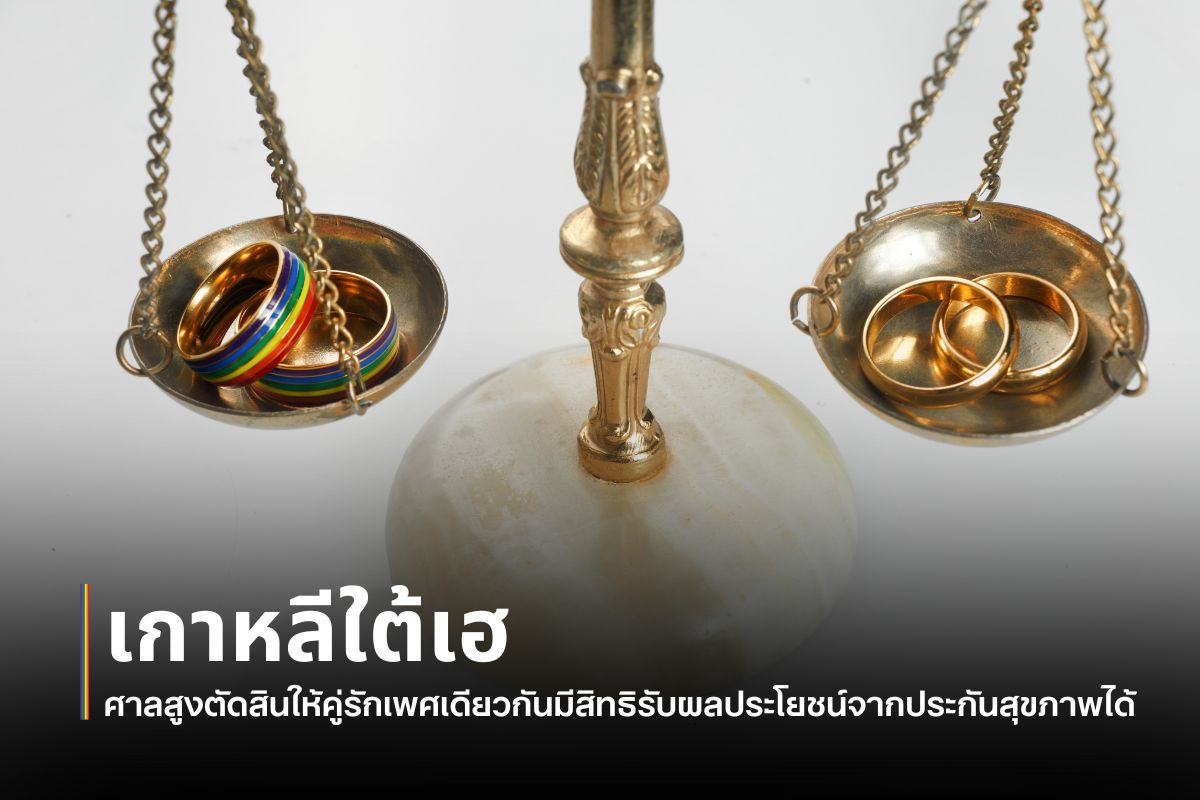
South Korea's Supreme Court Rules Same-Sex Couples Eligible for Health Insurance Benefits
South Korea's Supreme Court issued a landmark ruling granting same-sex couples the right to receive health insurance benefits as spouses. This decision marks a…
South Korea's Supreme Court Rules Same-Sex Couples Eligible for Health Insurance Benefits — Thai Sisterhood
South Korea's Supreme Court issued a landmark ruling granting same-sex couples the right to receive health insurance benefits as spouses. This decision marks a significant and unprecedented victory for LGBTQ+ rights advocates in the country. The ruling has been praised as a historic step in the fight for equal rights in South Korea.
Discrimination and Constitutional Rights Violations
The Supreme Court's ruling stated that the government's health insurance agency's refusal to provide spousal coverage to same-sex couples constitutes discrimination and a violation of the constitutional principles of equality. This decision underscores the importance of freedom and equality for all individuals, regardless of gender identity or sexual orientation.
Background of the Case and Lawsuit
The lawsuit was initiated in 2021 by So Seong-uk, who sued after his partner, Kim Yong-min, was denied registration for health insurance benefits by the National Health Insurance Service (NHIS). This case garnered significant media attention and support from human rights organizations, as it challenged the discriminatory practices faced by same-sex couples in South Korea.
Impact and Significance of the Ruling
Although South Korea does not currently legally recognize same-sex marriages, this ruling represents a crucial step forward for the LGBTQ+ community in their fight for equal rights. The decision not only affirms the right to health insurance benefits for same-sex couples but also paves the way for future changes and greater acceptance of equal rights for same-sex couples in South Korea.
Hope and Future for South Korea's LGBTQ+ Community
Following the court's decision, So expressed his hope that the ruling would serve as a milestone leading to further advancements for the LGBTQ+ community in South Korea. He also expressed optimism that, one day, same-sex couples would have the legal right to marry. He noted that this ruling signifies that the voices of the LGBTQ+ community are being heard and accepted in society.
Support from the Community and Human Rights Organizations
The ruling has received widespread support from LGBTQ+ communities and human rights organizations both domestically and internationally. Many have congratulated and praised the Supreme Court's decision as an important step toward promoting equality and ending discrimination in South Korean society. Numerous organizations have also expressed hope for future legal and policy changes that will officially recognize the rights of same-sex couples.
The Importance of Ending Discrimination
This decision not only impacts same-sex couples in South Korea but also serves as an inspiration for LGBTQ+ communities in other countries that continue to face discrimination and human rights violations. The ruling emphasizes the importance of ending discrimination and promoting equality in all aspects of life.
The Supreme Court's decision in South Korea is a testament to the principles of freedom and equality for all individuals and represents a significant milestone in the ongoing struggle for justice and equal rights for same-sex couples in the country.
REFERENCES
Sources and further reading
Primary and authoritative sources used for context and fact-checking.