
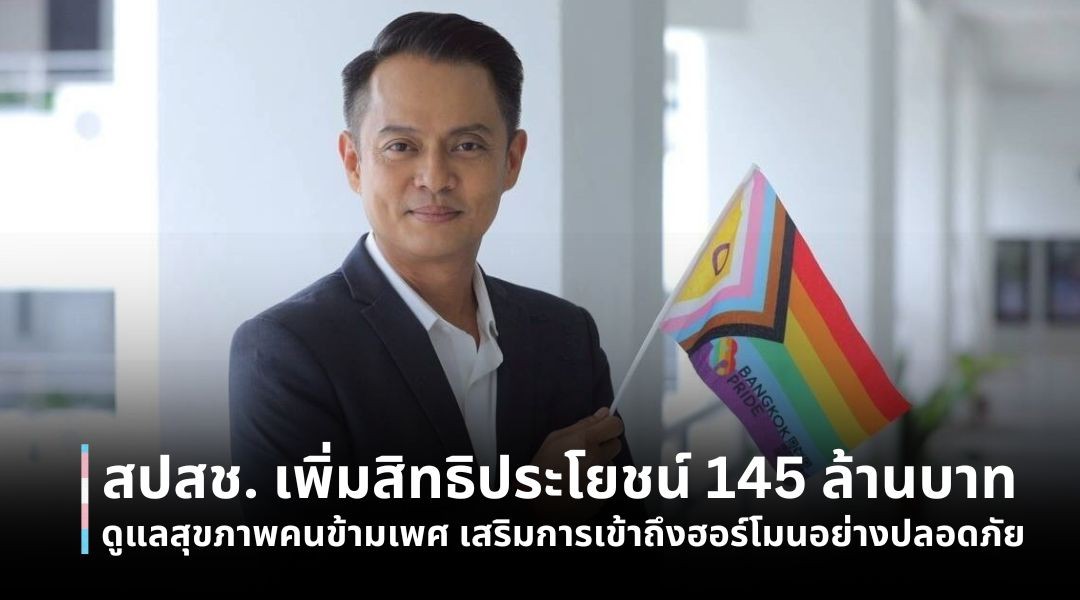
On June 29, 2025, Thailand’s Ministry of Public Health announced a major advancement in healthcare access rights for LGBTQ+ individuals.
Mr. Jirapong Songwatcharaporn, Deputy Spokesperson of the Ministry and a member of the National Health Security Office (NHSO) policy committee, revealed that Minister Somsak Thepsuthin has officially approved a budget of 145.62 million baht to purchase medications and medical supplies related to hormone use for transgender individuals. These items will be included under the "30-Baht Universal Healthcare Scheme" in the 2025 fiscal year.
Addressing Unsafe Hormone Use in Transgender Communities
This budget allocation aims to solve long-standing problems faced by transgender individuals seeking gender-affirming hormone therapy (GAHT). In the past, many relied on contraceptives or hormones purchased over the counter without medical guidance. Some followed advice from peers or online sources, resulting in unsafe hormone practices with potentially life-threatening side effects.
Mr. Jirapong emphasized that improper hormone use can lead to serious complications such as osteoporosis, abnormal lipid profiles, high blood pressure, diabetes, certain cancers, mood disorders, depression, and dangerous blood clots in the lungs or brain.
Six Medications Now Covered
To improve safety and support medically supervised hormone therapy, the NHSO has added six essential medications to the national healthcare coverage:
- Leuprorelin injection
- 17 Beta Estradiol tablet
- Estradiol transdermal patch
- Testosterone Enanthate injection
- Cyproterone Acetate tablet
- Spironolactone tablet
These medications will be procured through a special procurement plan and made accessible via Thailand’s universal healthcare program (Gold Card) at public hospitals nationwide.
Standardized Medical Care
Jirapong further explained that all hormone therapy should be provided under the supervision of qualified hormone therapy specialists. Patients must undergo thorough health evaluations, including psychological readiness assessments, to ensure safe and effective long-term gender transition care.
The program is expected to significantly reduce the monthly out-of-pocket costs for transgender individuals by 1,000–2,000 baht and lower the health risks associated with unsupervised hormone use.
This initiative is supported by several key institutions, including the Health Systems Research Institute (HSRI), the Royal Thai College of Obstetricians and Gynaecologists, and the Thai-PATH (Professional Association for Transgender Health), all of whom provide scientific data and best practice guidelines. Their collaboration ensures that care is comprehensive, safe, and respectful of human dignity.
A Message from the Minister: Health Is a Human Right
Health Minister Somsak Thepsuthin stated, “This initiative is not just about healthcare; it represents a significant step toward acknowledging gender diversity in Thai society. Ensuring equal access to health services is a way to affirm the dignity of every person.”
The expansion of benefits under the national healthcare system reflects the Ministry of Public Health and NHSO’s strong commitment to improving the quality of life for transgender people and the broader LGBTQ+ community—enabling them to live safer, healthier, and more dignified lives.
Sources and further reading
Primary and authoritative sources used for context and fact-checking.
- Frequently asked questions on sexual and gender diversity, health and human rights World Health Organization (WHO)
- The Thai Handbook of Transgender Healthcare Services IHRI & Center of Excellence in Transgender Health, Chulalongkorn University
- Standards of Care for the Health of Transgender and Gender Diverse People, Version 8 World Professional Association for Transgender Health (WPATH)
- Consolidated guidelines on HIV, viral hepatitis and STI for key populations (2022) World Health Organization (WHO)
- STI Treatment Guidelines: Transgender and Gender Diverse Persons U.S. Centers for Disease Control and Prevention (CDC)
- Legal Gender Recognition in Thailand: A Legal and Policy Review United Nations Development Programme (UNDP)
- The struggle of trans and gender-diverse persons United Nations Human Rights (OHCHR)