
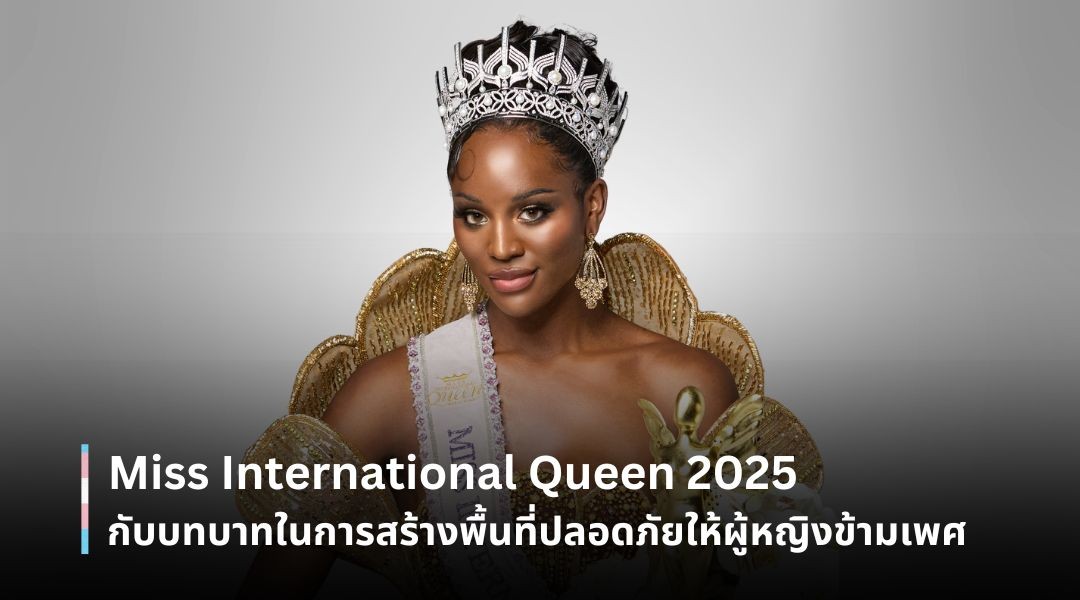
The Miss International Queen pageant, first held in 2004 in Pattaya, Thailand, has become the world’s largest and most prestigious beauty contest exclusively for transgender women. In 2025, the event continues to draw global attention—not only as a glamorous pageant but as a symbol of empowerment, equality, and a safe space for transgender women worldwide.
What makes Miss International Queen 2025 so meaningful is not just the dazzling gowns and performances. It is the ability of the stage to provide recognition, respect, and visibility to transgender women, proving that they deserve to stand proudly on the global stage without stigma or exclusion.
The History and Evolution of Miss International Queen
Before the 2000s, transgender women had little to no opportunity to participate in international beauty competitions. Many pageants excluded contestants based on birth-assigned sex, leaving transgender women invisible in mainstream spaces.
The creation of Miss International Queen marked a historic milestone for the LGBTQ+ community. From its inception, the pageant was designed to honor transgender women’s identities and provide them with a platform to showcase their beauty, intelligence, and advocacy. Over the past two decades, the pageant has influenced greater acceptance, inspired legislative reforms in some countries, and reshaped how society perceives transgender women.
Why Miss International Queen 2025 Matters

The 2025 edition of the pageant holds particular significance as global conversations on gender equality and human rights are gaining momentum. Many nations are now placing stronger emphasis on protecting and uplifting transgender communities.
This year’s theme, “Embrace Equality, Empower Diversity,” highlights that true beauty lies not only in appearance but also in the power to drive social change. Miss International Queen 2025 serves as more than a beauty contest—it is a global platform for transformation.
Creating Safe Spaces for Transgender Women
A core contribution of Miss International Queen 2025 is its ability to provide a Safe Space where transgender women feel respected, celebrated, and understood.
- Emotional safety: Contestants share their life stories and challenges without fear of judgment.
- Physical safety: Organizers ensure proper healthcare, travel, and accommodations are available for all participants equally.
- Identity recognition: Every contestant is addressed and respected according to her gender identity.
This transforms the pageant into more than a competition—it becomes a second home for transgender women, where dignity and self-expression thrive.
Contestants’ Voices and Stories
For many contestants, Miss International Queen 2025 is not just a chance to compete, but a chance to declare their existence and worth to the world.
- A delegate from the Philippines emphasized the importance of family acceptance and education for transgender youth.
- A Latin American contestant highlighted the struggles against discriminatory laws that still deny equal rights.
- A European participant noted that despite progressive laws, social prejudice remains a significant barrier.
These stories reveal that Miss International Queen functions as a form of cultural politics, amplifying the voices of transgender women and drawing international attention to their realities.
Human Rights and Global Advocacy
Miss International Queen 2025 aligns with the missions of global human rights organizations such as UN Women, Human Rights Campaign, and ILGA World. By blending art, culture, and beauty, the pageant conveys complex issues of gender and equality in a way that resonates with millions worldwide.
Unlike formal legal campaigns, Miss International Queen reaches audiences emotionally, helping break down biases and promoting inclusivity at a deeper cultural level.
Economic and Tourism Impact

Beyond its social mission, the pageant generates significant economic value, especially for Pattaya and Thailand.
- Thousands of international visitors and media outlets attend the event.
- Hotels, restaurants, and tourism industries benefit directly.
- Thailand reinforces its position as a regional hub for LGBTQ+ inclusivity and diversity tourism.
Thus, Miss International Queen is not only a cultural symbol but also a driver of sustainable economic growth.
Lessons for Society
For general audiences, Miss International Queen 2025 is also an educational experience. Viewers gain new insights into the struggles and achievements of transgender women, often leading to reduced prejudice and increased empathy.
For LGBTQ+ youth worldwide, the event serves as a beacon of hope—proof that they have a place in society, a future, and undeniable worth.
A Stage that Transforms Lives and Societies
Miss International Queen 2025 once again proves that beauty transcends gender. It is about authenticity, resilience, and the ability to use one’s voice to inspire change. The pageant creates safe spaces for transgender women, amplifies advocacy for equality, and inspires society to embrace diversity.
This event is not merely a “beauty pageant”—it is a global platform of rights, equality, and hope where transgender women stand tall as leaders, advocates, and role models.
Sources and further reading
Primary and authoritative sources used for context and fact-checking.
- Frequently asked questions on sexual and gender diversity, health and human rights World Health Organization (WHO)
- The Thai Handbook of Transgender Healthcare Services IHRI & Center of Excellence in Transgender Health, Chulalongkorn University
- Standards of Care for the Health of Transgender and Gender Diverse People, Version 8 World Professional Association for Transgender Health (WPATH)
- Consolidated guidelines on HIV, viral hepatitis and STI for key populations (2022) World Health Organization (WHO)
- STI Treatment Guidelines: Transgender and Gender Diverse Persons U.S. Centers for Disease Control and Prevention (CDC)
- Legal Gender Recognition in Thailand: A Legal and Policy Review United Nations Development Programme (UNDP)
- The struggle of trans and gender-diverse persons United Nations Human Rights (OHCHR)